
We
have a deep love for the country side and the beauty within it especially
the trees. As a woodworker I have the opportunity to experience at first hand
the great gift of timber and all it has to offer. This precious resource with
which we can do so much has to used sensibly and with respect for future generations.
Generally I believe most people would agree with this and accept that with
common sense and restraint were necessary we can use this
resource and maintain and replenish stock for the benefit of our future generations.
I have always felt it is right for us all to plant and nurture more trees, for we all use wood in one of its many shapes and forms, whether it be paper, envelopes or furniture in our everyday lives. We all benefit from the clean air trees help to provide, and the recreational facilities of a simple woodland. I personally get a great thrill from collecting seeds and growing them on to plant out. At the moment I am growing Alder,Ash,Sycamore,Rowan,Hazel and Native Walnut to plant out. Some of these will be planted at home and some in the surrounding countryside. Future plans are for a poly tunnel and expanding the quantity of sowings. I would welcome any information or experience any one may have had nurturing native tree's from seed, and will be happy to pass on my experiences to anyone who may be interested.
Local timber which I use is sourced from either windblown stock or from area's which are currently undergoing change back to Native species. Other area's also include tree's which have been felled because of a public danger, or over mature tree's showing signs of dying off or decay. I feel it is wrong to let a good tree rot when its life can be extended beyond what nature can offer. The beauty and figure nature created can be enjoyed beyond it's natural life span. I also believe there is nothing wrong in harvesting timber from a well managed woodland. As long as tree's are planted to replace those harvested preferably more, the balance is kept intact. Clear fells are where bad management is clearly shown, no shelter is kept for young tree's replacing those felled, water run off can erode the ground with no root systems to hold it together and the wildlife is immediately evicted with no were to go.
The
simple answer is to plant more than you use and increase diversity of species.
More fruit tree's should be considered as they also provide a yearly harvest
of food for us and the native wildlife. In addition it would be nice to see
more coppice planted and managed for fuel wood. This would provide a sustainable
heating source for years to come. We utilize all our off cuts which we can
not use in the workshop as fuel along with distributing the saw dust and shavings
to neighboring people for use as pet bedding etc. Saw dust
is recycled in the chicken run and breaks down very quickly into rich ground,
providing compost for the garden after several months. So some of the nutrients
in the wood we use eventually returns to the young growing tree's through
this process.


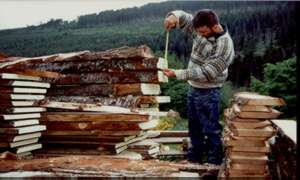
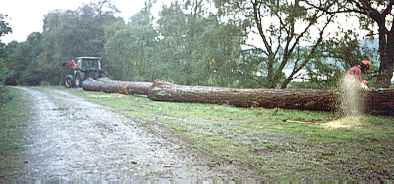
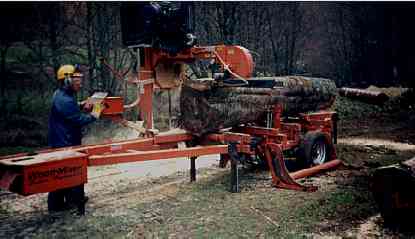
Native Beech felled during restoration of a old folly, the tree was very close and the root system was damaging the old historic building. The tree's were planked into a assortment of sizes for stock. Some of the timber will be used by the clients son for his steading conversion, including a feature staircase. The logs produced some beautiful timber with a lot of heart color and figure.